
F.A.Q.
Frequently Asked Questions
Some of the questions we have been asked and their awnsers.
What Problem does your equipment solve?

What Problem Does the Envirowaste Automatic Tank Cleaning System Solve?
Cleaning offshore drilling rig tanks containing Oil-Based Mud (OBM), Synthetic-Based Mud (SBM), fuel and other hydrocarbon residues presents significant operational challenges. Conventional tank cleaning equipment can require considerable installation space, valuable deck capacity and complex cleaning arrangements.
Envirowaste Automatic Tank Cleaning System has been specifically designed to overcome these challenges.
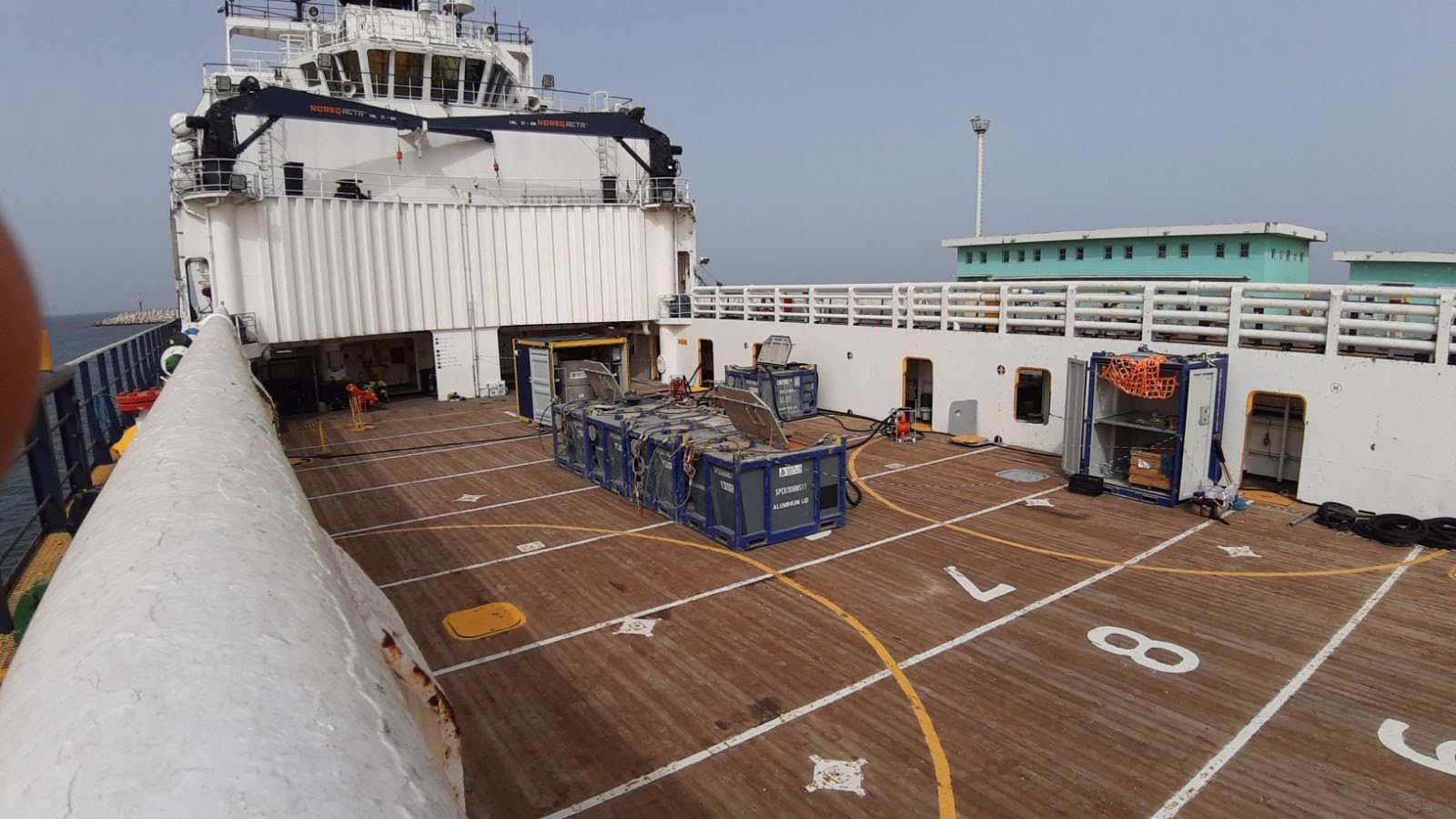
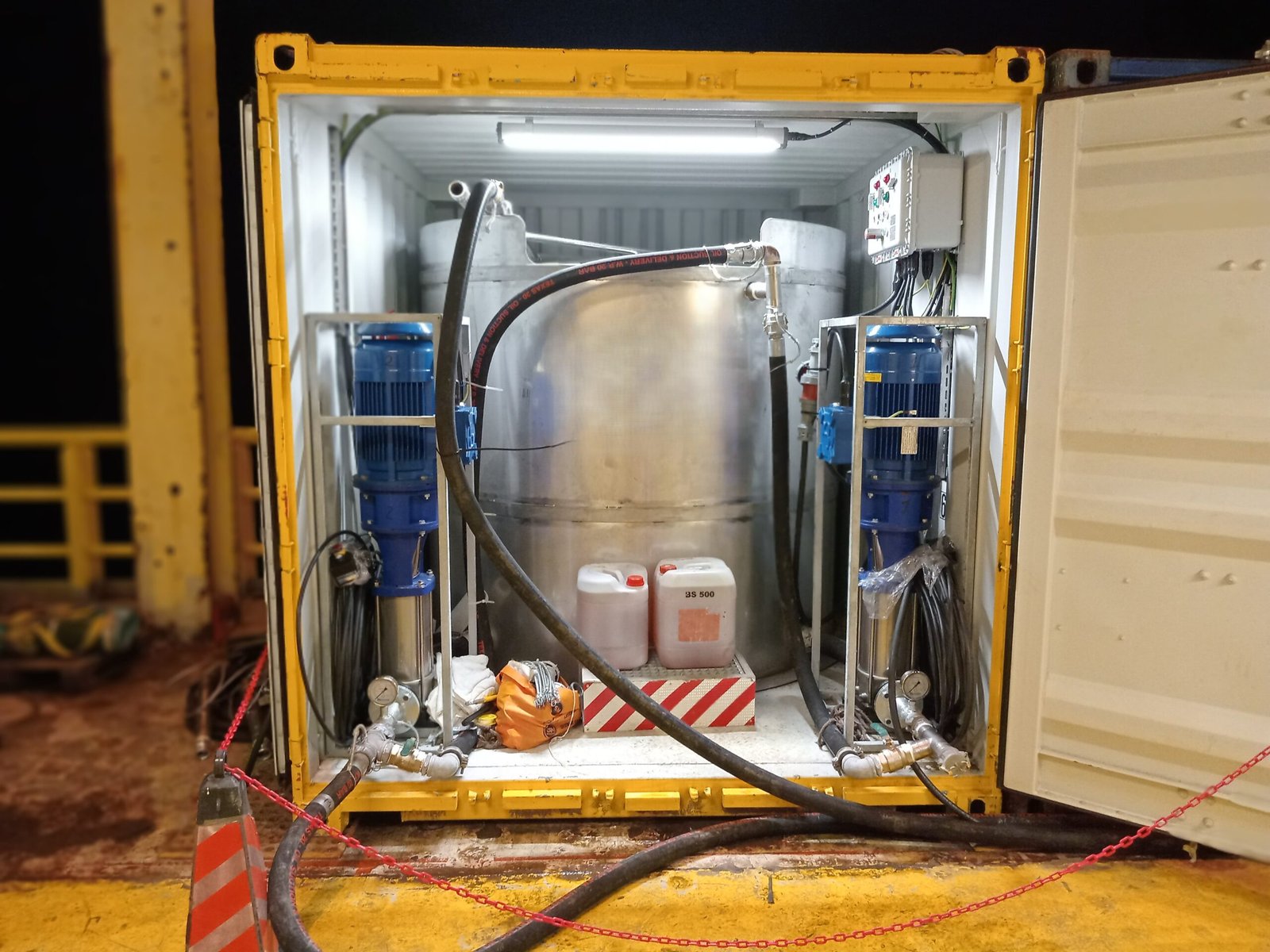
Its most significant competitive advantage is its exceptionally compact design, requiring a footprint of just 10 feet. On offshore drilling rigs, where available deck space is extremely limited and valuable, minimising the equipment footprint is a major operational benefit.
The system provides a complete automated tank cleaning solution while integrating oily slops treatment, separation of solids and hydrocarbons, and continuous water recovery and reuse.
By combining these processes within one compact system, Envirowaste helps offshore operators address several key challenges:
Limited offshore deck space: A compact 10-foot footprint minimises the space required for equipment installation.
Difficult tank cleaning operations: Designed for the complete cleaning of wet tanks containing OBM, SBM, fuel and other hydrocarbon residues.
Oily sludge and waste management: Integrated treatment separates recovered solids, oil and water.
High water consumption: Closed-loop water recovery and reuse reduces the need for continuous fresh water supply.
Operational efficiency: Automated cleaning and continuous slops treatment help streamline tank cleaning operations.
Envirowaste offers offshore drilling operators a compact, integrated and efficient approach to automatic tank cleaning, addressing the practical limitations of conventional equipment while making better use of valuable offshore deck space.
How does it work?
How Does the Automatic Tank Cleaning System Work?
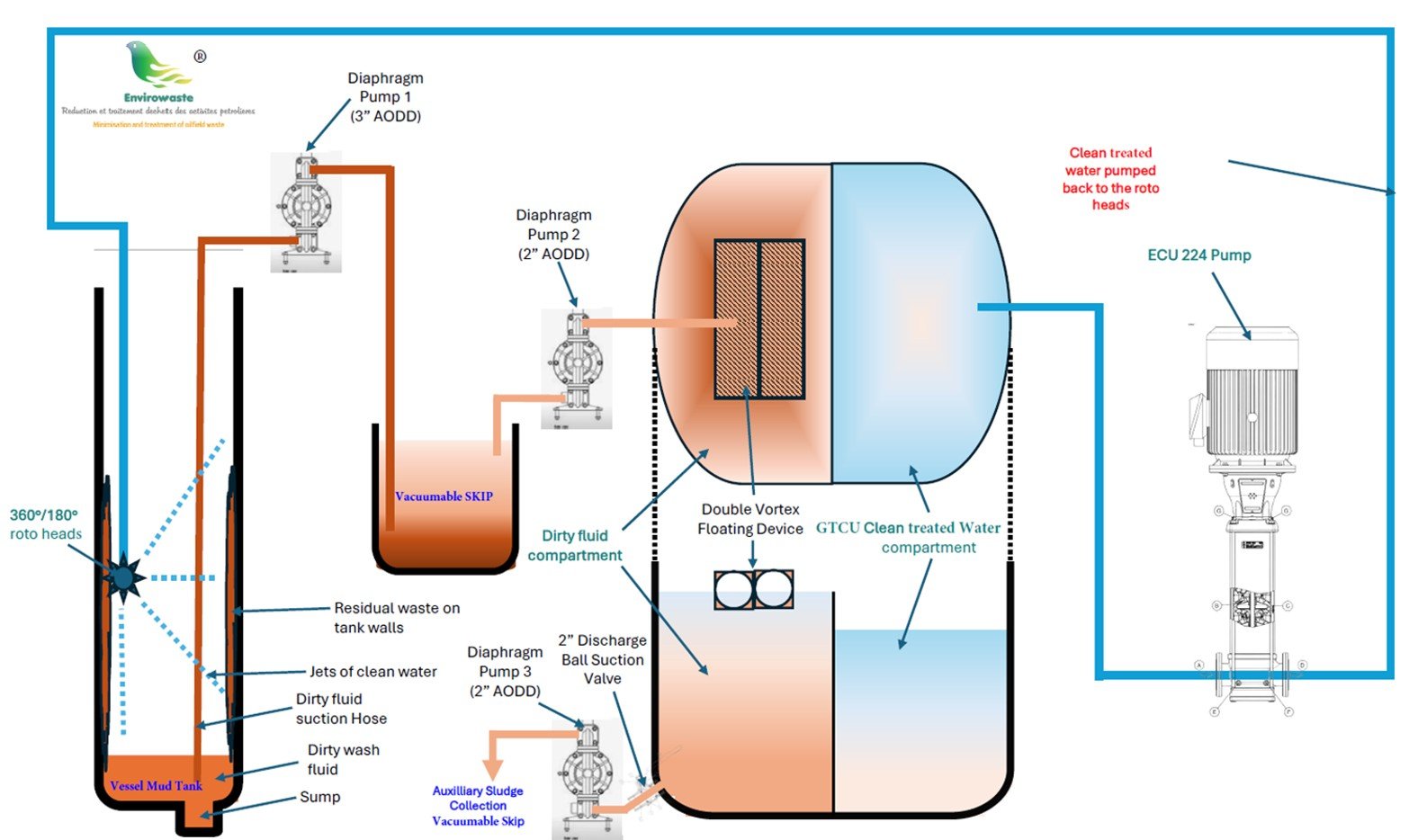
Envirowaste’s Automatic Tank Cleaning System is designed as an integrated, closed-loop cleaning solution, operating through two interconnected but separate circuits: the Water Treatment Loop and the Tank Cleaning Loop.
This innovative process enables continuous tank cleaning, separation of oily waste and recovery and reuse of treated water throughout the operation.
1. Water Treatment Loop – Continuous Slops Separation
Using powerful rotary cleaning heads and high-pressure water jets, the system breaks down and removes solid sediment deposits, accumulated sludge and heavy hydrocarbon residues from the bottom of tanks.
The resulting oily slops are continuously transferred to a specially designed, multi-compartment slops treatment tank, with a capacity of 6.5 m³, constructed from 316-grade stainless steel.
Through the controlled application of specially formulated cleaning agents and desemulsifier, the treatment process separates the recovered mixture into three distinct phases:
Water phase: Recovered for reuse within the cleaning system.
Solid phase: Separated and collected for appropriate handling and disposal.
Oil phase: Separated (usually the Base Oil, which it’s the main building element of the OBM) for appropriate recovery (if treated further on) or disposal.
2. Tank Cleaning Loop – Continuous Water Recovery and Reuse
Water recovered from the slops treatment process is continuously circulated back into the automatic tank cleaning system.
As cleaning water returns from the tanks, it is passed through the treatment tank, where the oily residues and solids are separated. The recovered water is then returned to the cleaning circuit for further use.
This continuous closed-loop process significantly reduces the requirement for fresh cleaning water while minimising the volume of wastewater generated during tank cleaning operations.
By integrating automated tank cleaning, oily slops treatment and water recovery into one system, Envirowaste delivers an efficient and space-conscious solution for cleaning offshore drilling rig tanks containing OBM, SBM, fuel and other hydrocarbon residues.
What types of tanks can it clean?

What Types of Tanks Can the GTCU Model ECU 224 Clean?
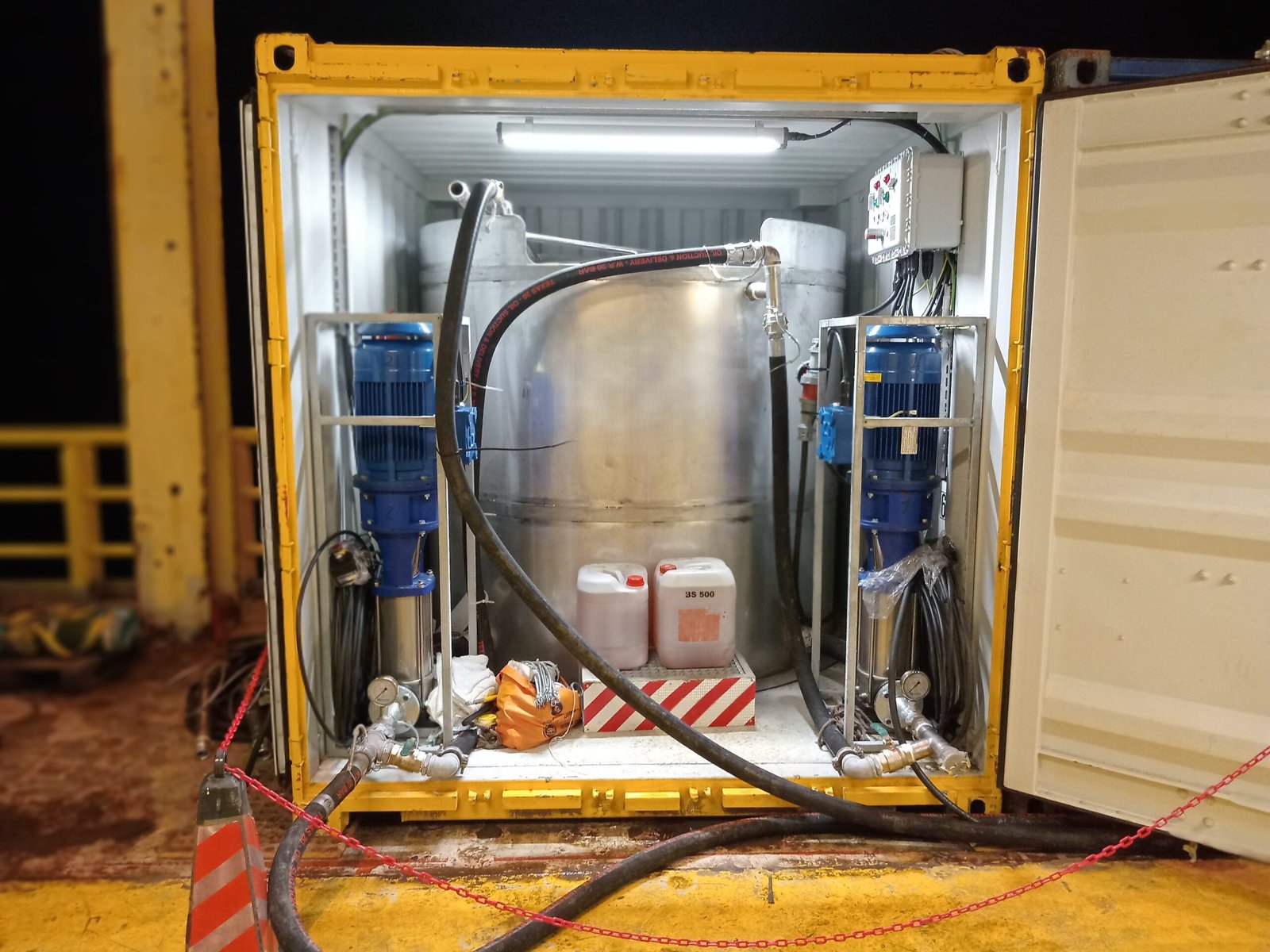
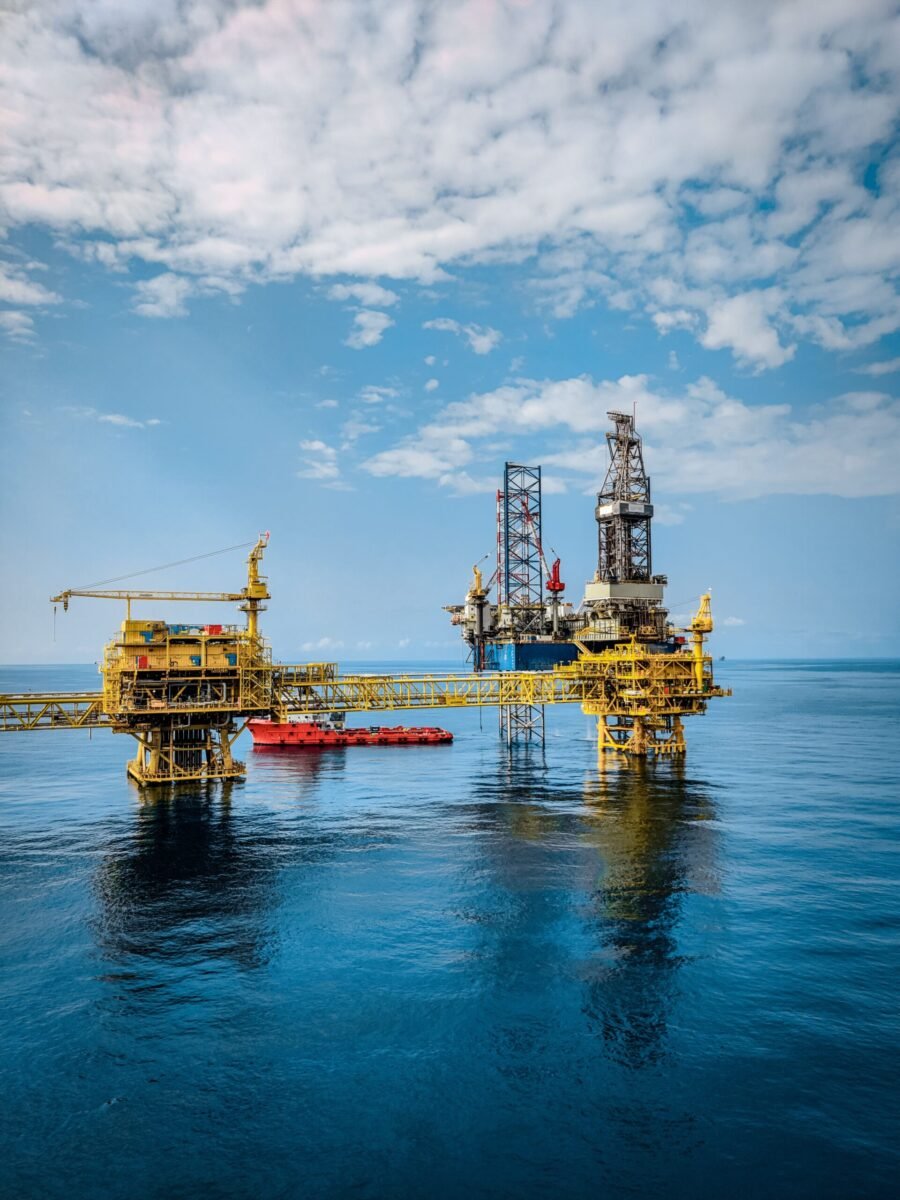
The Envirowaste GTCU Model ECU 224 Automatic Tank Cleaning System has been specifically designed for cleaning offshore drilling rig mud tanks, associated PSV (Platform Supply Vessel) tanks and a wide range of other tanks contaminated with oil, hydrocarbons, drilling fluids and industrial residues.
Using its specially designed 180° and 360° Wizzy rotary cleaning heads, the ECU 224 can effectively clean a variety of tank configurations, dimensions and internal geometries.
Its versatile cleaning technology makes it suitable for a wide range of applications, including:
Offshore Drilling Operations
Drilling rig mud tanks containing Oil-Based Mud (OBM) and Synthetic-Based Mud (SBM).
PSV supply vessel tanks.
Cylindrical and rectangular (parallelepipedal) closed tanks.
Deep-column storage tanks.
Offshore fuel storage tanks.
Other enclosed tanks containing oily and hydrocarbon-contaminated residues.
Onshore Drilling Operations
Open-top rectangular mud tanks.
Drilling fluid storage tanks.
Fuel storage tanks.
Other industrial and oilfield tanks requiring automated cleaning.
Crude Oil Storage Tank Cleaning
The GTCU Model ECU 224 can also be incorporated into a suitable system configuration for crude oil storage tank cleaning.
However, this application requires an additional, specialised crude oil treatment process designed to deal with challenging deposits such as accumulated paraffin wax, sandy sediments and other heavy hydrocarbon residues.
By integrating the ECU 224 with the appropriate crude oil treatment equipment, Envirowaste can offer a more comprehensive solution for demanding crude oil storage tank cleaning applications.
With its interchangeable 180° and 360° Wizzy cleaning heads and versatile system configuration, the GTCU Model ECU 224 provides a flexible automatic tank cleaning solution for offshore drilling rigs, onshore oilfields, supply vessels and other industrial applications.
How does it reduce personnel exposure?
How Does the GTCU ECU 224 Reduce Personnel Exposure?
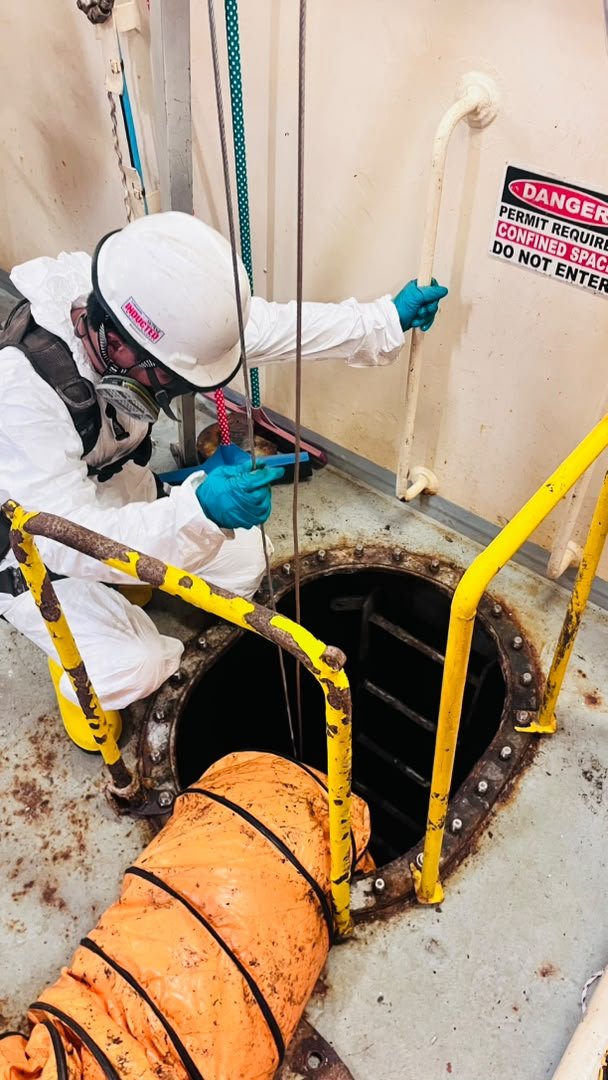
Personnel safety is a primary consideration in offshore and onshore tank cleaning operations. Traditional tank cleaning methods can require personnel to enter confined spaces, exposing them to potentially hazardous atmospheres, hydrocarbon residues, chemical contaminants and other operational risks.
The Envirowaste GTCU Model ECU 224 Automatic Tank Cleaning System has been designed to minimise these risks through its fully automated cleaning process.
By using remotely operated cleaning equipment and specialised 180° and 360° Wizzy rotary cleaning heads, the system significantly reduces the need for personnel to enter tanks during cleaning operations.
Minimising Confined Space Entry
One of the system’s greatest safety advantages is its ability to perform tank cleaning operations with personnel remaining outside the tank.
Confined Space Entry is therefore reduced to an absolute minimum and, in many applications, may be eliminated during the cleaning process.
In certain complex tank configurations, however, limited personnel entry may still be necessary to position or reposition the fixing arrangements and accessories used to support and direct the cleaning Wizzy heads. This may particularly apply to tanks containing extensive internal upper pipework or other obstructions.
Improving Offshore and Onshore Operational Safety
By reducing the requirement for personnel to enter enclosed tanks, the GTCU ECU 224 helps operators:
Minimise personnel exposure to hazardous confined space environments.
Reduce the potential risks associated with hydrocarbon contamination and hazardous atmospheres.
Reduce the frequency of manual intervention during tank cleaning.
Improve personnel safety during offshore and onshore cleaning operations.
Support safer and more efficient tank maintenance procedures.
Envirowaste’s objective is simple: automate the cleaning process, minimise human intervention and significantly reduce the need for personnel to enter confined spaces.
The GTCU ECU 224 provides a modern approach to safer, automated tank cleaning for the offshore oil and gas industry and onshore oilfield operations.
What equipment is supplied?
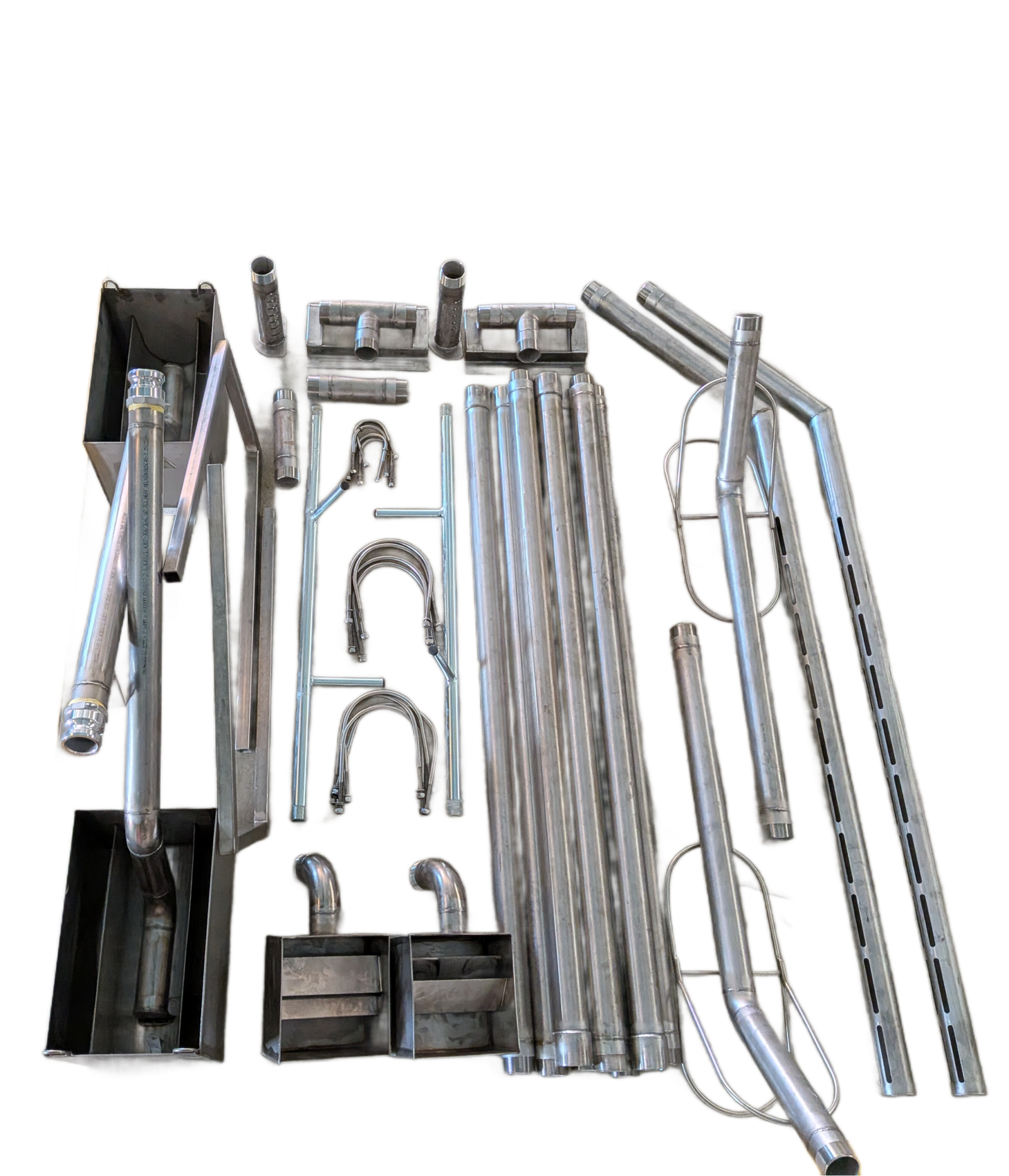
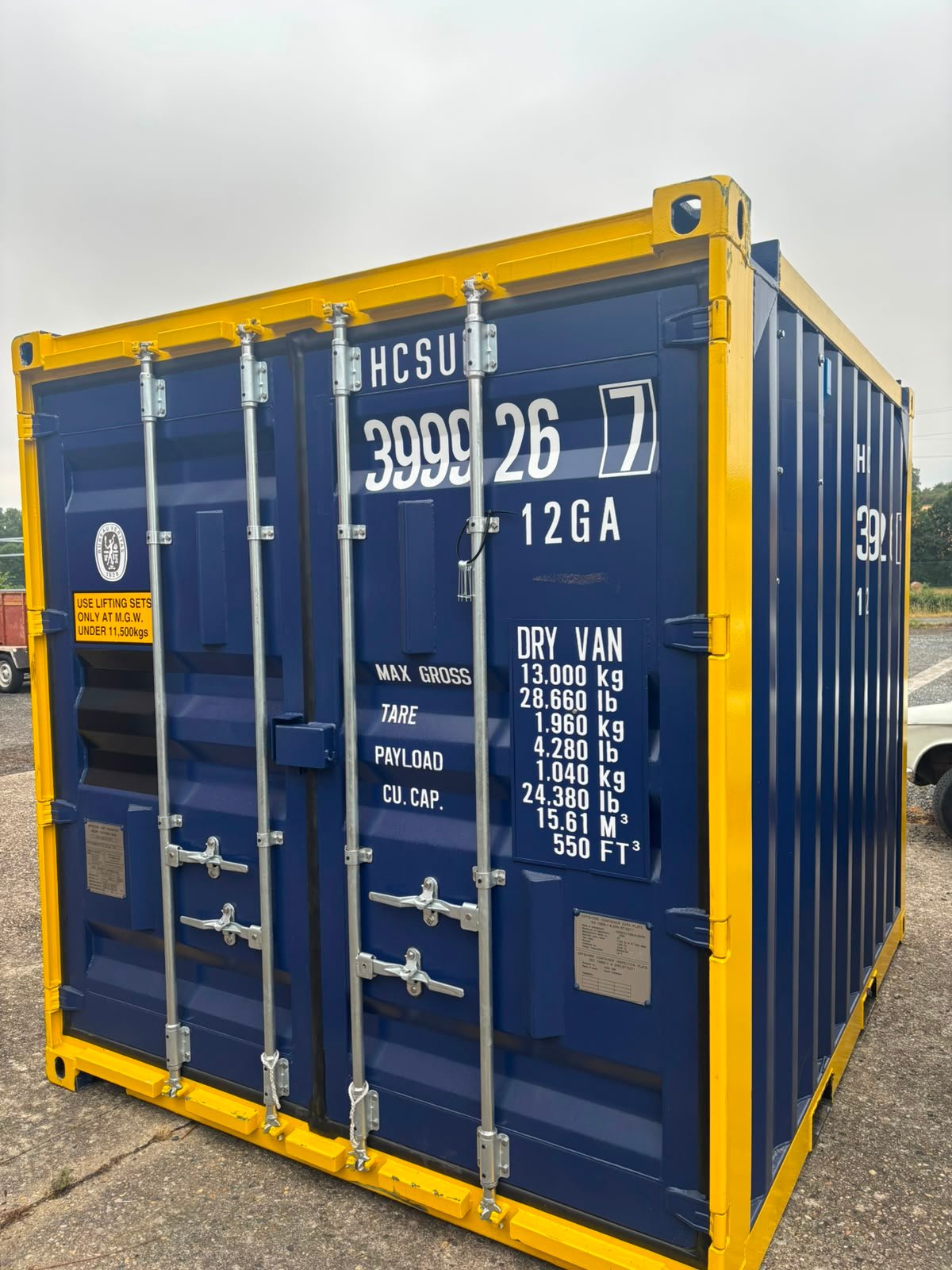
What Equipment Is Supplied with the GTCU Model ECU 224 V2.0?
The Envirowaste GTCU Model ECU 224 V2.0 is a fully integrated automatic tank cleaning and oily slops treatment system, engineered for demanding offshore and onshore oilfield applications.
Designed and manufactured to meet the specified ATEX requirements for hazardous-area applications and housed within a DNV 2.7-1 certified offshore container (including a 4 legs wire rope slings assembly), the system provides a complete, transportable tank cleaning and water treatment package.
The standard equipment package includes:
1. Offshore Containerised GTCU Unit
The complete GTCU system is housed within a DNV 2.7-1 certified offshore container, providing a robust and transportable installation suitable for offshore operating environments.
2. High-Pressure Pumping System
2x five-stages vertical multistage pumps.
15 kVA electric motors, suitable for 50/60 Hz operation, subject to the specified electrical configuration.
Cable remote controls for pump operation.
3. Integrated Slops and Water Treatment System
1x multi-compartment stainless steel slops and water treatment tank.
6.5 m³ treatment tank capacity.
Designed to facilitate the separation of water, oil and solid residues recovered during tank cleaning operations.
4. Slops Transfer Pumping Equipment
2x 2-inch Air Operated Double Diaphragm (AODD) transfer pumps.
1x 3-inch bottom-tank slops transfer AODD pump.
These pumps facilitate the transfer of recovered oily slops and contaminated liquids throughout the treatment process.
5. Hoses and Connection Equipment
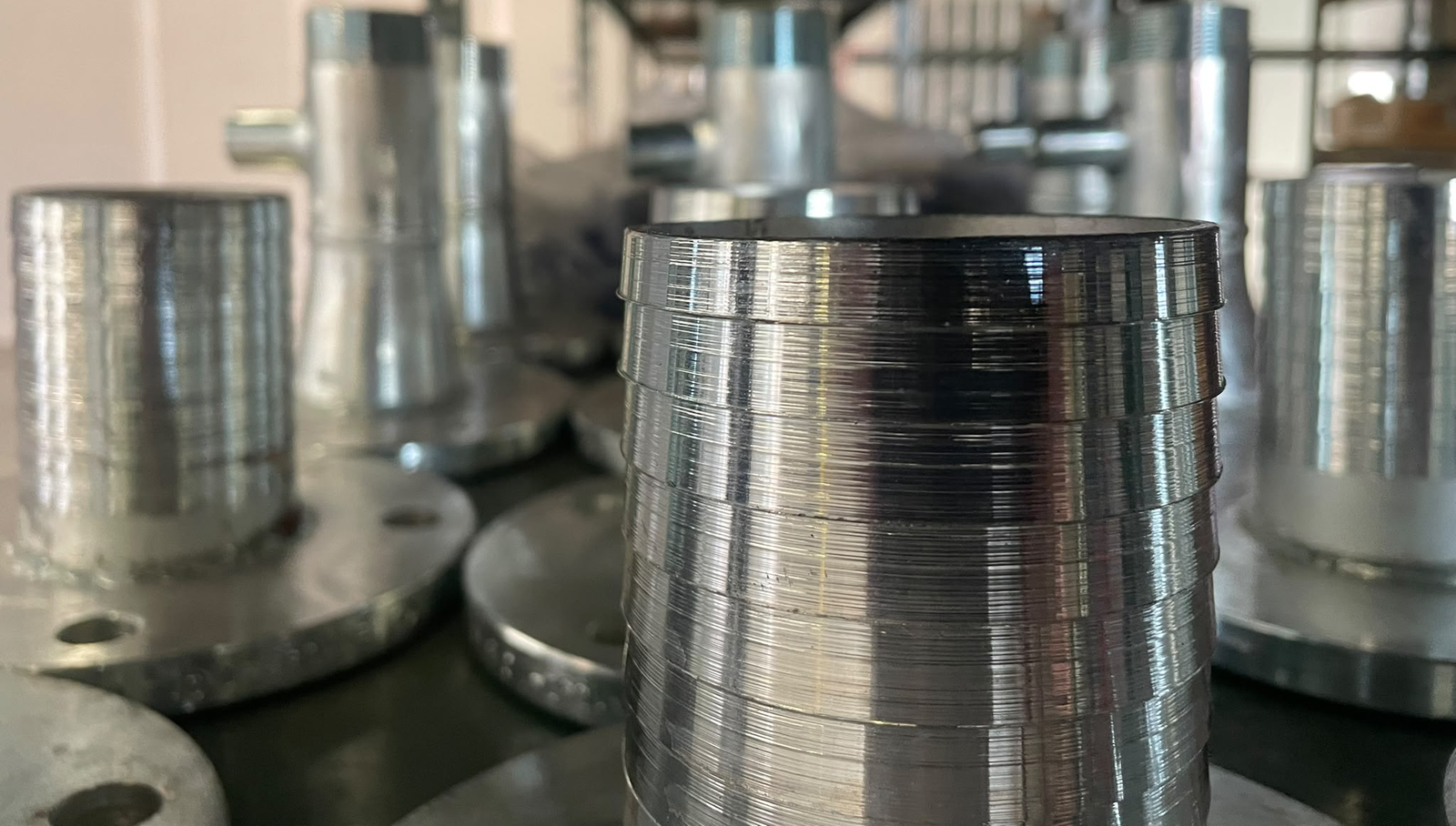
2-inch Buna-rated, oil-resistant heavy-duty transfer hard hoses.
30 metres of four-core armoured electrical power connection cable.
A Complete Integrated Tank Cleaning Package
The GTCU ECU 224 V2.0 brings together pumping equipment, rotary tank cleaning technology, oily slops transfer and integrated water treatment within one offshore containerised system.
Its modular configuration and offshore-ready design provide operators with a practical solution for automated tank cleaning, hydrocarbon waste separation and water recovery across offshore drilling rigs, supply vessels and onshore oilfield facilities.
What are the operational benefits?





How Does the GTCU ECU 224 Reduce Operating Costs (OPEX)?
The Envirowaste GTCU Model ECU 224 V2.0 has been designed not only to improve offshore and onshore tank cleaning operations, but also to deliver significant potential savings in overall operating expenditure (OPEX).
By combining automated tank cleaning, chemical oily slops separation, continuous water recovery and a compact containerised design, the system helps operators reduce several of the major costs traditionally associated with offshore tank cleaning operations.
1. Compact and Easy-to-Deploy Equipment
The GTCU ECU 224 is supplied as a compact, lightweight and easily deployable offshore cleaning package.
Housed within a single 10-foot offshore container, the complete system minimises transportation requirements, simplifies mobilisation and helps reduce associated shipping and logistics costs.
Its compact footprint also makes it particularly suitable for offshore drilling rigs, where available deck space is often extremely limited.
2. Reduced Fresh Water Consumption
The system requires an initial water volume of approximately 6.5 m³, which is continuously treated, recovered and reused throughout the cleaning operation.
This closed-loop process significantly reduces the requirement for additional fresh water, helping operators minimise water procurement, transportation and associated operational costs.
3. Reduced Waste Disposal Costs – ZERO increase of the global footprint of the client’s Waste
One of the major economic advantages of the GTCU ECU 224 is its chemical slops separation process.
Using a specially formulated eco-conscious cleaning agent and, simultaneously desemulsifier, heavy oily slops are chemically treated to separate the water, oil and solid phases.
Unlike conventional treatment systems that rely on disposable filter cartridges, Diatomaceous Earth (DE) or similar filtration media, the GTCU treatment process is designed to operate without these consumables.
This eliminates the associated purchase and disposal costs of contaminated filter cartridges and filtration media, while helping to minimise secondary waste generation.
4. Concentrated Cleaning Chemicals – Lower Logistics Costs
The specialised Envirowaste cleaning and demulsifying agent is supplied in a highly concentrated formulation, typically requiring a dilution ratio of 1:4.
This concentration reduces the volume of product required for transportation and storage compared with ready-to-use cleaning solutions.
Consequently, operators can benefit from reduced chemical shipping volumes, lower associated logistics costs and more efficient chemical handling.
5. Reduced Tank Cleaning Time – Lower Overall Cleaning Costs
The automated cleaning process, combined with continuous oily slops treatment and water recovery, is designed to improve overall cleaning efficiency.
Reducing the time required to clean individual tanks can help minimise the total operational time associated with cleaning PSV supply Vessels and offshore drilling rigs.
This can contribute to a lower consolidated Cost of Goods and Services (COGS) per PSV Vessel or drilling Rig, while improving the utilisation of available equipment and personnel.
Actual savings will depend on tank configuration, contamination levels and operating conditions.
6. Environmentally Considerate Cleaning Chemistry
The GTCU ECU 224 uses a specialised cleaning and demulsifying agent designed for demanding oilfield applications.
The product is reported to have a Gold classification under applicable North Sea oilfield chemical assessment standards and contains approximately 90% naturally derived plant-based ingredients.
Its formulation is designed to provide effective hydrocarbon cleaning and oily slops separation while reducing reliance on conventional chemical ingredients and minimising irritating vapours.
7. Simple and User-Friendly Operation
The complete system is controlled through a single consolidated ATEX-rated control panel.
Designed with operational simplicity in mind, the interface uses clearly identified green START and red STOP controls, helping operators manage routine equipment functions through a straightforward control arrangement.
8. Extensive Range of Specialised Accessories
The GTCU ECU 224 is supplied with an extensive range of specially designed 316-grade stainless steel accessories.
These provide flexible installation and positioning options for the rotary Wizzy cleaning heads, allowing them to be secured, clamped and supported within different tank configurations.
The accessories are designed to accommodate internal tank structures, including ladders, pipework and other obstructions, providing greater flexibility across different offshore and onshore tank cleaning applications.
Lower Operating Costs Through Integrated Technology
The Envirowaste GTCU ECU 224 V2.0 combines automated tank cleaning, chemical slops separation, continuous water recovery and compact offshore transportation into one integrated package.
By reducing fresh water requirements, eliminating the need for specified disposable filtration consumables, minimising chemical transportation volumes and improving cleaning efficiency, the system offers offshore and onshore operators the opportunity to achieve meaningful reductions in overall tank cleaning expenditure.
Envirowaste’s objective is simple: deliver efficient, automated tank cleaning while helping operators reduce OPEX, minimise waste and optimise their offshore resources.